The piccolo, often seen as the playful yet challenging cousin of the flute, is an instrument that adds a bright, charming sheen to any ensemble. Its high-pitched voice can pierce through the air with scintillating melodies or blend into the ensemble’s upper register with angelic clarity.
Mastering the piccolo is no easy feat. A strong foundation in finger positions is essential to unlock its true potential. Whether you’re a seasoned flutist or a curious beginner, understanding piccolo fingerings is crucial for intonation and agility.
In this guide, we will explore detailed fingering charts designed to elevate your playing. With step-by-step instructions and tips, you’ll be able to transition smoothly across octaves and tackle challenging passages with confidence.
Prepare to refine your technique and let your piccolo playing soar to new heights. Join us as we embark on this musical journey to tame this powerful yet delicate instrument.
Understanding the Basic Principles of Flute Fingerings
Embarking on the journey to master piccolo fingerings begins with grasping the fundamental principles that govern flute fingerings. Recognizing patterns and understanding the logic behind the finger placements can be incredibly empowering and will simplify the learning process.
The Octave Relationship
The piccolo is unique, with its range spanning several octaves higher than the standard flute. To navigate this range, players must recognize that fingerings often follow similar patterns across different octaves. Learning these patterns allows for faster adaptation and smoother transitions.
Finger Placement Strategy
Each note on the piccolo corresponds to a specific combination of open and closed keys. Developing muscle memory through repetition is key. Practicing slower passages initially can ensure accuracy, allowing speed to build naturally over time. Consistently playing scales and arpeggios can help reinforce these finger placements in a musical context.
Memorizing these patterns will aid in intuitive playing, helping you focus more on expressiveness and less on mechanics. A well-practiced foundation in basic fingerings will give you the confidence to tackle intricate music with ease and grace.
By understanding these basic principles, you’ll set yourself up for successful mastery of the piccolo and unlock a world of dynamic musical possibilities.
Exploring the Importance of a Clear Piccolo Fingering Chart
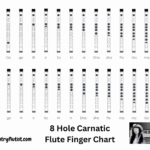
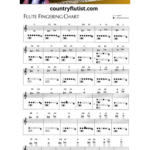
A well-organized fingering chart is an indispensable tool for any piccolo player, offering a visual representation of the finger positions necessary for each note. It acts as a roadmap, guiding players through the complex landscape of pitches and techniques inherent to the instrument.
Visual Learning Aid
For musicians, especially visual learners, a clear fingering chart provides immediate reference points, making it easier to grasp and remember intricate finger patterns. This visual aid can be particularly beneficial when tackling challenging sections or unfamiliar key signatures.
Additionally, a detailed chart helps identify alternate fingerings, offering solutions to technical difficulties and enhancing overall performance efficiency. These alternatives can be crucial when striving for better intonation or smoother passages.
Building Confidence and Independence
With a fingering chart at hand, players gain independence, developing problem-solving skills by referencing the chart to address technical challenges on their own. This not only builds confidence but also fosters a deeper understanding of the instrument.
Incorporating a clear piccolo fingering chart into your practice routine enhances your learning experience and contributes to a more in-depth mastery of the piccolo, enabling you to play with greater skill and expression.
Tips for Efficiently Using a Piccolo Fingering Chart
Leveraging a piccolo fingering chart effectively can significantly enhance your learning curve and improve your playing technique. By adopting strategic approaches, you can maximize the chart’s benefits and build a strong technical foundation.
Integrate with Practice
Incorporate the chart into your daily practice routine. Use it as a quick reference to clarify fingerings for new pieces or to troubleshoot tricky passages. Consider starting each session by reviewing a few notes or passages, gradually internalizing the charts through repetition and practice.
Prioritize sections that challenge you the most and refer back to the chart when needed, allowing you to focus your practice on mastering difficult transitions and nuances.
Highlight Alternative Fingerings
Identifying and marking alternate fingerings on your chart can be incredibly useful. These variations are invaluable for achieving better tone quality, managing awkward passages, or adjusting intonation. Experiment with these alternatives during practice to discover which variations work best for specific musical contexts.
The chart should be seen as a flexible tool, adaptable to your evolving skills. As you advance, continue to update your chart and explore new fingerings and techniques, ensuring it remains a reliable and up-to-date resource throughout your musical journey.
Common Mistakes to Avoid When Using Flute Finger Position Resources
While flute and piccolo finger position charts are invaluable tools, improper usage can lead to inefficient learning and frustrating setbacks. Avoiding common pitfalls ensures you get the most out of these resources.
Over-Reliance on Charts
Relying too heavily on charts without committing fingerings to memory can hinder your ability to play fluidly. Aim to use charts as a supplement rather than a crutch, gradually transitioning to memorization and hands-on practice to reinforce learning.
Ignoring Contextual Application
It’s important not to isolate fingerings from their musical context. Understanding how finger positions function within a piece aids musicality and expressive playing. Practice using fingerings in scales, etudes, and musical excerpts to see how they fit within broader musical phrases.
Neglecting Regular Updates
Finger position resources should evolve with your skill level. Neglecting to update your charts as you discover new techniques or alternate fingerings can limit your growth. Regularly revisiting and enhancing your resources keeps them relevant and aligned with your developing proficiency.
By being mindful of these common mistakes, you can effectively harness the power of finger position resources and achieve graceful, confident piccolo performances.
Mastering Your Flute Finger Positions: The Bottom Line
Mastering the piccolo and flute requires more than just natural talent; it demands dedication and a thoughtful approach to each component of playing. Understanding and efficiently utilizing a correctly structured fingering chart is a vital part of this journey.
From this exploration, it becomes clear that a strong grasp of basic finger positions acts as a solid foundation for advanced musicianship. By integrating clear fingering charts into your practice routine, you not only enhance technical abilities but also gain the freedom to focus on musical expression.
Equally important is the ability to learn from mistakes. Recognizing common pitfalls and adjusting your approach as needed can transform challenges into opportunities for improvement. As you grow, regularly updating your resources will ensure they remain effective aids in your evolving musical journey.
Ultimately, the goal is to achieve a fluid connection between your fingerings and the music you produce. When finger positions become second nature, the piccolo’s bright, vibrant voice is unhindered, allowing your artistic intentions to shine through.
In your journey to mastery, remember that patience and persistence are key. The combination of methodical practice and a flexible mindset will guide you toward musical excellence. Let your engagement with finger position resources empower you to reach new heights in piccolo playing, and enjoy the rich tapestry of music you are capable of creating.
Enjoyed this article? Download my FREE Flute Gift and receive 5 beginner hymns plus a printable practice tracker.


You Might Also Like: