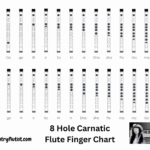
Looking for an easy way to understand the 8 hole Carnatic flute finger chart? Whether you’re a beginner or an experienced flutist exploring South Indian classical music, learning the correct finger positions is essential for producing clear, expressive notes.
The Carnatic flute offers a wider range of tonal possibilities than many Western flutes, but it also requires precise finger placement and control. That’s why having a clear, easy-to-follow finger chart is so important.
In this guide, you’ll learn how the 8-hole Carnatic flute works, how to read the finger chart, and practical tips to help you play with confidence.
Understanding the Basics of the 8 Hole Carnatic Flute
 The journey into the world of the 8-hole Carnatic flute begins with understanding its structure and layout. Made traditionally from bamboo, this instrument possesses a unique rustic charm. Its eight finger holes are arranged in a straight line, with seven on top and one beneath for the thumb, allowing for precise control over each note.
Holding the Carnatic flute requires a balanced grip, enabling fluid movement across the holes. The positioning of fingers and thumb is crucial in creating a solid foundation for producing clear and resonant tones. This technique is key to mastering the delicate adjustments needed for different notes and ornaments characteristic of Carnatic music.
Developing a consistent embouchure, which is the way you shape your mouth and lips, plays a vital role in sound production and tonal quality. Being mindful of breath control allows you to sustain notes and phrases effortlessly, essential for the expressive nuances in Carnatic compositions.
Familiarizing yourself with the basic notes, or swaras, of the Carnatic music scale helps in intuitively navigating the finger chart. As you progress, regular practice and keen listening will enhance your ability to execute the complex melodic patterns that define this exquisite musical tradition.
🎶 Want Help Learning the Flute? 
If you’re feeling overwhelmed by finger charts or technique, you’re not alone.
I offer private online flute lessons where I help students:
- Understand finger placement step-by-step
- Improve tone and control
- Build confidence quickly
👉 Start here: countryflutist.com/flute-lessons/
Tips for Efficiently Using the Finger Chart
Mastering the finger chart of the 8-hole Carnatic flute requires focus and strategic practice. Begin by familiarizing yourself with each note associated with the different combinations of open and closed holes. Spend time identifying how each carnatic flute finger positions configuration translates into distinct swaras, making it easier to navigate the chart seamlessly.
A methodical approach to practice helps internalize finger positions. Start slowly, ensuring each note rings clearly and accurately before increasing speed. Focus on transitions between notes, maintaining a fluid motion across the instrument. This gradual build-up reinforces muscle memory, crucial for performance ease.
Incorporate rhythm exercises into your practice routine to improve timing and coordination. Use a metronome to maintain consistent tempo while honing finger dexterity. This technique enhances agility, allowing you to tackle intricate musical passages confidently.
Listening actively to accomplished Carnatic musicians provides insight into applying finger chart knowledge musically. Notice their execution of gamakas—ornamentation techniques that characterize Carnatic music. Practice replicating these embellishments, integrating them naturally into your playing style.
Each practice session should culminate in revisiting the entire chart, reinforcing finger placements for all notes. With patience and perseverance, you will unlock the full potential of the 8-hole Carnatic flute, enriching your musical repertoire.
8-Hole Carnatic Flute Finger Chart – Free Printable PDF
FreeExploring Advanced Techniques for Improved Playing
Once you’ve mastered the basics, delving into advanced techniques elevates your Carnatic flute playing to new heights. A crucial aspect is mastering gamakas, the aesthetic embellishments that infuse Carnatic music with its distinctive flavor. These subtle oscillations and slides between notes require precise control and nuanced finger movements.
Developing a refined sense of microtonality is vital. This involves manipulating pitch using minute finger adjustments, producing notes that diverge slightly from Western intonation. Practicing with an experienced teacher or using audio references can be invaluable for understanding these intricacies.
Another technique to explore is intricate rhythmic phrasing, which enhances your interpretation of compositions. Experiment with diverse tala cycles (rhythmic patterns) and complex cross-rhythms to develop greater rhythmic agility. This proficiency allows you to tackle advanced compositions with dynamic expression and flair.
Practicing with varied dynamics and articulations further refines your sound palette. Experiment with different breath pressures to create contrasting volume levels and timbres. Incorporating staccato and legato playing enhances your versatility, adding expressiveness to your musical narratives.
Finally, regularly improvising within different ragas helps solidify your command over advanced techniques. As you incorporate these elements, your playing will embody a rich tapestry of traditional mastery and personal artistry.
🎁 New to the flute?
If you’re looking for beautiful music that’s fun and easy to play, don’t miss my Free Flute Gift! You’ll receive 5 beginner hymns, a FREE practice tracker, and beginner practice tips to help you build confidence.
👉 Get Your Free Flute Gift
Common Mistakes to Avoid When Referencing the Finger Chart
Navigating the bamboo flute fingering chart can seem daunting, but being mindful of common pitfalls ensures a smoother learning experience. One frequent error is relying solely on visual memory rather than developing muscle memory. While it’s important to understand finger placements visually, internalizing them through practice is key to fluid playing.
Another common mistake is neglecting the role of the thumb hole. It’s easy to overlook its impact on sound production. Ensure consistent thumb placement and pressure for accurate pitch control, especially during transitions between notes.
Impatience can lead to rushing through practice sessions, compromising accuracy. It’s essential to prioritize precision over speed in your practice routine. Focus on perfecting each note and transition before increasing tempo to avoid ingraining mistakes.
Overlooking the importance of a relaxed posture and proper breath control is another pitfall. Tension in the body impacts tone and technique. Maintain an ergonomic posture and focus on deep, controlled breathing to support sustained and expressive playing.
Lastly, avoid isolating your practice to technical exercises. It’s crucial to apply the finger chart knowledge in musical contexts regularly. Integrating technique with musicality enhances both your understanding and enjoyment of the Carnatic flute.
Enhancing Your Skills Through Regular Practice and Application
Achieving mastery on the 8-hole Carnatic flute is a rewarding pursuit that thrives on consistent and thoughtful practice. Dedicate time each day to practicing scales, finger drills, and compositions that challenge your current skill level. This disciplined approach gradually builds confidence and proficiency in handling the instrument.
Embrace Diverse Repertoire
Expanding your repertoire enriches your understanding of the Carnatic tradition and keeps practice sessions engaging. Explore different ragas and compositions, integrating new techniques and styles. This not only enhances technical skill but also deepens your musical expression and interpretative capabilities.
Collaborating with fellow musicians provides invaluable opportunities for growth and application. Engaging in group practice enhances your listening skills and rhythmic interplay, critical elements of ensemble performance. Sharing insights with peers fosters a sense of community and inspiration.
Reflect and Refine
Regularly recording your practice sessions allows you to track progress objectively. Listening back to your playing highlights areas for improvement and celebrates milestones achieved. Use these insights to refine your practice approach, setting specific goals for subsequent sessions.
Ultimately, the key to mastery lies in your commitment to continuous learning and exploration. Embrace each practice session as a step forward on your journey, knowing that each note played is an investment in your musical growth and passion for the Carnatic flute.
🎵 Is the 8 Hole Carnatic Flute Hard to Learn?
How to play carnatic flute, the 8-hole Carnatic flute can feel challenging at first, especially if you’re new to finger charts and Indian classical music. However, with consistent practice and the right guidance, most beginners can start producing clear notes within a few weeks.
The key is to focus on:
- Proper finger placement
- Breath control
- Slow, consistent practice
Over time, the finger chart becomes second nature, allowing you to focus more on musical expression and less on technique.
The Bottom Line: Mastering the 8 Hole Carnatic Flute Finger Chart
Mastering the 8-hole Carnatic flute finger chart is a journey filled with discovery and deepening musical appreciation. From grasping the foundational finger positions to advancing through intricate techniques and compositions, each step in this process contributes to becoming a more skilled and expressive musician.
Understanding the basics serves as a solid foundation, enabling you to build upon more advanced techniques. These elements, combined with the ability to create beautiful gamakas and navigate complex rhythmic patterns, enhance your overall musicianship. As you integrate these techniques into your practice, they transform challenges into opportunities for artistic growth.
Regular practice, paired with mindful application, keeps you engaged and attentive. By embracing a diverse repertoire and collaborating with other musicians, you not only enhance your technical skills but also develop a richer, more nuanced interpretation of Carnatic music. Reflecting on progress through recordings and setting specific goals further fuels this rewarding process.
Avoiding common mistakes and maintaining a commitment to continuous improvement can unlock the full potential of this versatile instrument. The effort invested in mastering the flute fingering chart is repaid in the satisfaction of creating music that resonates with both players and listeners.
In the end, the journey with the 8-hole Carnatic flute is about much more than acquiring technical skills. It’s about immersing yourself in the joy of music, expressing your unique voice, and connecting with a centuries-old tradition. Each note you play contributes to this ongoing narrative, bridging past and present with every breath.
Enjoyed this article? Download my FREE Flute Gift and receive 5 beginner hymns plus a printable practice tracker.


You Might Also Like: