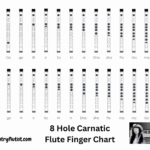
The sweet, melodious sound of the flute has captivated listeners for centuries, and learning to play this enchanting instrument can be a rewarding journey. One of the most accessible entry points to flute playing is the six-hole flute, known for its simplicity and versatility.
Understanding the six-hole flute finger chart is essential for both novice and seasoned flutists. This chart serves as a roadmap, guiding fingers to their precise positions and allowing you to produce the correct notes. Mastery of this chart unlocks the full potential of the flute, enabling you to transition smoothly through traditional melodies and contemporary pieces.
In this comprehensive guide, we will dive deep into techniques, finger placements, and best practices to enhance your proficiency. Whether you are aiming to play folk tunes or explore new horizons in flute music, this guide provides the foundation needed to elevate your skills and enrich your musical expression.
Embark on this musical adventure, and let the six-hole flute become an extension of your creative spirit.
Understanding the Basics of the 6 Hole Flute Finger Chart
Starting with the six-hole flute involves an essential step: familiarizing yourself with the basic finger chart. This chart is your guide to positioning your fingers correctly to play different notes. Each hole corresponds to a note, and covering or uncovering these holes in different combinations allows you to produce a wide range of pitches.
When first approaching the chart, take time to understand which fingers correspond to which holes. Typically, the left hand is used to cover the top three holes, while the right hand covers the bottom three. This setup might feel unfamiliar initially, but with practice, it will become instinctual.
Begin by learning the simplest scales. Playing these scales reinforces finger positions and builds muscle memory, ensuring your fingers effortlessly find their places over time. Patience is key; practice slowly and consistently to develop confidence and accuracy.
As you grow comfortable, explore different melodies and rhythms. The six-hole flute finger chart is not just a tool but a bridge to musical expression. With each note you play, you step closer to mastering the flute’s rich and varied voice. Let this foundational knowledge be your guide to discovering the flute’s nuances and beauties.
Key Finger Positions for Playing Various Notes on a 6 Hole Flute
To unlock the potential of the six-hole flute, it’s crucial to familiarize yourself with the key finger positions for playing various notes. Each note requires a specific combination of covered and uncovered holes, providing a distinct pitch that builds your musical repertoire.
Basic Finger Combinations
Starting with the basics, ensure your fingers are relaxed as you cover the holes. For the note "A," all fingers typically cover their respective holes. To move to "G," lift your right hand’s pinky, letting the flute’s timbre brighten slightly.
Transitioning to "F," you’ll need to lift the ring finger of your right hand while keeping others steady. Mastery of these initial positions sets the stage for more complex melodies.
Intermediate Notes and Techniques
As you advance, experiment with combinations like half-holing, where a finger partially covers a hole to produce sharps or flats. This technique broadens your tonal palette and enriches your musical expression.
Keep practicing these positions daily, and the act of shifting from one note to the next will become fluid and instinctual. With dedication, you’ll discover the flute’s expansive capabilities, allowing you to compose and perform with creativity and confidence.
Practical Tips for Efficiently Using the 6 Hole Flute Finger Chart
Maximizing the utility of the six-hole flute finger chart involves strategic practice and a thoughtful approach to learning. Begin by dedicating time each day to familiarizing yourself with the finger positions, ensuring that you can identify each note quickly and accurately.
Consistency is key. Regular practice sessions help reinforce muscle memory, allowing your fingers to glide naturally to the correct positions without conscious effort. Incorporate exercises that challenge your transitions between notes to enhance your dexterity and speed.
When practicing, use a metronome to keep time. This tool aids in developing a sense of rhythm and timing, ensuring that your note transitions remain smooth within varying tempos. Start slowly and gradually increase your speed as you gain confidence.
Visualization can also be a powerful tool. Spend a few moments each day mentally visualizing the finger positions and transitions. This mental practice complements your physical efforts and helps solidify your knowledge of the chart.
Finally, don’t hesitate to experiment with different styles and genres on your flute. This exploration keeps practice engaging and allows you to apply your knowledge of the finger chart in dynamic and creative ways, enriching your overall flute playing experience.
Techniques for Improving Accuracy and Speed with the 6 Hole Flute Finger Chart
Achieving both accuracy and speed on the six-hole flute requires diligent practice and focused techniques. Begin with slow, deliberate practice to ensure each note rings clear and true, dedicating special attention to troublesome transitions between notes.
Developing Finger Agility
Incorporate finger exercises into your routine that emphasize rapid movement and precision. Practicing scales and arpeggios are excellent ways to build agility. Start at a comfortable tempo, gradually increasing the speed as you remain consistent and accurate.
Use a practice routine that alternates between fast and slow passages. This strategy challenges your fingers to adapt quickly, enhancing both speed and control. The varied tempo reinforces endurance and musicality, enabling you to maneuver the flute effortlessly.
Enhancing Muscle Memory
Repeatedly practicing specific passages ensures that muscle memory is activated. Focus on sections that require high-speed transitions and play them until your fingers naturally position themselves correctly each time.
Keep an ear tuned to the quality of your notes. Strive for clarity and beauty, even at higher speeds. Consistent accuracy will lead to confident and lively performances, showcasing your mastery of the six-hole flute’s finger chart.
By building a foundation of accuracy before speed, you enable a seamless integration of the two, enriching your musical journey and performance capabilities.
Exploring Advanced Playing Techniques Using the 6 Hole Flute Finger Chart
Once you are comfortable with the basics and have honed your accuracy and speed, it’s time to delve into advanced techniques to expand your musical expression on the six-hole flute. These techniques unlock a broader spectrum of sounds and styles, transforming your performance from simple to sophisticated.
Mastering Overblowing
Overblowing is a technique that allows you to access higher octaves by increasing your breath pressure. This method, combined with precise finger placement, can create sharp, resonant notes that enhance the complexity of your pieces. Practicing breath control is crucial to achieve the desired octave without losing tonal quality.
Introducing Vibrato and Ornamentation
Vibrato adds emotional depth and warmth to your sound. By subtly undulating your breath or lightly fluctuating your finger pressure over the holes, you can inject a sense of soul and character into each note. Similarly, practicing embellished fingerings, such as trills and grace notes, adds a layer of ornamentation to your music, making it dynamic and engaging.
Experiment with different genres and incorporate these advanced techniques to find your unique sound. With continuous practice, your fluency in these techniques will grow, enabling you to convey a rich tapestry of musical stories through the versatile six-hole flute.
Expanding Your Repertoire with the 6 Hole Flute Finger Chart
As your confidence grows with the six-hole flute, expanding your repertoire becomes an exciting opportunity to diversify your musical experiences. The beauty of the six-hole flute lies in its versatility, allowing you to explore a vast array of musical styles and traditions.
Exploring Different Musical Genres
Start by incorporating pieces from various genres such as folk, classical, and contemporary music. Each style offers unique challenges and learning opportunities, enhancing your skills and broadening your artistic expression. Folk tunes are particularly rewarding, honoring the rich cultural history embedded in their melodies.
Collaborate with other musicians to explore ensemble playing. The flute’s clear, penetrating sound complements other instruments beautifully, enriching both your repertoire and your understanding of musical interplay. Participating in ensemble sessions sharpens your listening skills and teaches you how to blend or stand out as needed.
Compile a list of pieces that intrigues and challenges your current skill level. Begin with pieces that are just within reach and gradually introduce more complex compositions. This gradual progression ensures you remain motivated and continually sharpen your proficiency.
By embracing diverse musical pieces and styles, you’ll cultivate a varied and engaging repertoire. This journey not only strengthens your technical skills but also fuels your passion for music and innovation on the six-hole flute.
The Bottom Line: Mastering the 6 Hole Flute Finger Chart
In conclusion, mastering the six-hole flute finger chart opens the doors to a captivating world of music. This journey, while challenging, offers immense rewards. By starting with the basics and building upon a solid foundation of finger positioning, you set the stage for developing both accuracy and speed.
Consistent practice ensures that these skills become second nature. Incorporating advanced techniques such as overblowing and vibrato further enhances your musical versatility, adding layers of expression to your performances. These methods invite you to explore and experiment with the rich sounds that the flute can produce.
Not to mention, expanding your repertoire encourages growth and keeps the learning process invigorating. Exploring different musical genres and collaborating with other musicians enriches your musical journey and provides fresh perspectives on the art of flute playing.
The key to mastering the six-hole flute is patience and passion. As you progress, remember that every note played is a step toward greater mastery. Embrace the challenges and celebrate each milestone. Your dedication will undoubtedly transform your practice into a beautiful, fluent musical expression.
Ultimately, the six-hole flute is not just an instrument, but a conduit for creativity and emotion. By honing your skills and expanding your musical boundaries, you not only become a proficient flutist but also a storyteller, capturing the hearts of your audience with each performance. Keep playing, enjoy the process, and let the music flow through you.
Enjoyed this article? Download my FREE Flute Gift and receive 5 beginner hymns plus a printable practice tracker.


You Might Also Like: