Choosing your first flute can feel overwhelming, especially when you see so many brands, models, features, and price ranges. If you’re wondering how to choose a flute, the good news is that you don’t need to be an expert to make a smart decision.
The right flute depends on several things, including your experience level, budget, musical goals, and how comfortable the instrument feels when you play it.
As a flute teacher and professional flutist, I’ve seen how much difference the right instrument can make. A good flute should make learning easier—not leave a beginner fighting the instrument just to produce a clear sound.
In this guide, I’ll explain what to look for when buying a flute and help you understand the differences between beginner, intermediate, and professional instruments.
 What Kind of Flute Should You Buy?
Before you start comparing brands, decide what level of flute you need. A beginner has different needs from an advanced student or professional musician.
Beginner Flutes
A beginner flute should be reliable, comfortable, and durable enough for regular practice.
Most new students do not need a professional instrument. Instead, look for a well-made student flute from a reputable manufacturer.
When choosing a beginner flute, consider:
- A reputable manufacturer
- Good key alignment
- Comfortable keywork
- Closed or open holes appropriate for the player
- A C footjoint
- A quality case
- Access to repair and maintenance services
A good beginner flute should make it easier to learn proper technique and develop a consistent tone.
Intermediate Flutes
An intermediate flute can make sense after you’ve developed your basic technique and want an instrument that offers more flexibility and refinement.
Intermediate instruments may include features such as:
- Open holes
- A B footjoint
- Improved headjoint designs
- Higher-quality materials
- More refined key mechanisms
If you’re ready to compare intermediate instruments, see my guide to Top 10 Intermediate Flute Brands.
Professional Flutes
Professional flutes are designed for advanced players who need greater control, tonal flexibility, projection, and responsiveness.
These instruments can be considerably more expensive than student models. However, a professional flute isn’t automatically the right choice for every player.
If you’re interested in professional instruments, take a look at my guide to Best Professional Flutes for Advanced Players.
How Much Does a Flute Cost?
Flute prices vary dramatically depending on the instrument’s materials, craftsmanship, brand, features, and intended level of performance.
A beginner doesn’t necessarily need to spend thousands of dollars on a first flute. At the same time, extremely inexpensive instruments can sometimes create problems with intonation, keywork, or reliability.
The goal is to find the best-quality instrument you can reasonably afford, rather than simply choosing the cheapest flute available.
A student who is just beginning may need a very different instrument from someone preparing for college auditions or pursuing a professional music career.
If you’re interested in professional instruments and their prices, see my article How Much Does a Professional Flute Cost?
What Should You Look for When Buying a Flute?
Once you know what level of instrument you need, it’s time to look at the features that affect how a flute plays.
Build Quality
A flute should be well constructed and able to withstand normal use. The keys should move smoothly, and the pads should seal properly.
Poor construction can make learning frustrating because the player may struggle with problems that aren’t actually caused by their technique.
Comfortable Keywork
The flute should feel comfortable in your hands.
Everyone’s hands are different, so an instrument that feels wonderful to one player may not feel quite as comfortable to another.
Pay attention to whether you can reach the keys naturally without excessive stretching or tension.
Reliable Mechanism
The key mechanism should move smoothly and consistently.
A quality flute should respond without requiring excessive force from your fingers. The keys should also return to position properly after you release them.
Intonation
A good flute should play reasonably well in tune throughout its range.
Intonation also depends on the player, so learning proper air support and embouchure remains important. However, a well-made instrument gives the player a better foundation for developing good intonation.
Tone
Listen carefully to the flute’s tone.
A good instrument should produce a clear, even sound throughout its range. The tone should also give the player enough flexibility to play softly, loudly, brightly, or warmly.
Responsiveness
A responsive flute should speak easily when you play it.
This is especially important for beginners because struggling to produce notes can make the learning process unnecessarily frustrating.
Open-Hole vs. Closed-Hole Flutes
One of the first questions many flute buyers encounter is whether they should choose an open-hole or closed-hole flute.
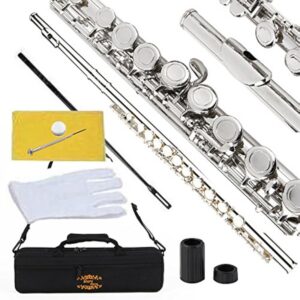
A closed-hole flute has solid keys that completely cover the tone holes. This design is common on beginner and student instruments.
An open-hole flute has holes in the centers of several keys. Players eventually use finger placement and technique to cover these openings correctly.
Neither design is automatically better for every player.
For a beginner, a closed-hole flute can provide a simpler starting point. More advanced players may prefer an open-hole instrument because it offers additional options for certain techniques and repertoire.
C Foot vs. B Foot
Another feature you may encounter when shopping for a flute is the footjoint.
A C footjoint is common on beginner and intermediate flutes. A B footjoint extends the flute’s lower range by adding a low B.
A B footjoint can be useful for advanced players who need the additional low note for their repertoire. However, beginners don’t necessarily need to spend extra money on a B foot simply because it is an upgrade.
Consider your playing level and the music you plan to perform.
More features don’t automatically make an instrument better for every musician.
Silver, Nickel, and Other Flute Materials
Flutes can be made from different materials, and you’ll often see descriptions involving nickel silver, sterling silver, and other metals.
The material can affect the instrument’s response, tone, weight, and price. However, beginners should avoid choosing an instrument based solely on the material.
A flute’s overall quality matters more than a single feature.
The quality of the construction, headjoint, mechanism, pads, and setup can all affect how the instrument feels and sounds.
If you’re comparing instruments, try them whenever possible instead of relying only on a manufacturer’s specifications.
Which Flute Brands Should You Consider?
There are many established flute manufacturers offering instruments for beginners, intermediate players, advanced students, and professional musicians.
The best brand for you depends on your playing level, budget, and personal preferences.
Instead of choosing a brand simply because you’ve heard of it, consider the specific model you’re interested in and how it feels when you play it.
If you’re researching brands, my other flute guides can help:
- Student Flute Recommendations
- Top 10 Intermediate Flute Brands
- Best Professional Flutes for Advanced Players
- Top 8 Flutes for Advanced Students
These articles go into greater detail about specific instruments and playing levels.
Should You Buy a New or Used Flute?
Buying a used flute can sometimes be a good way to get a higher-quality instrument within your budget.
However, a used flute should receive careful inspection before you purchase it.
If possible, have a qualified flute repair technician examine the instrument.
When looking at a used flute, check for:
- Dents or significant damage
- Worn or damaged pads
- Keys that don’t move properly
- Air leaks
- Loose or noisy mechanisms
- Missing or damaged parts
- Signs that the flute has not been properly maintained
A used flute in excellent condition can be a wonderful instrument. A damaged flute that needs extensive repairs, however, may end up costing much more than expected.
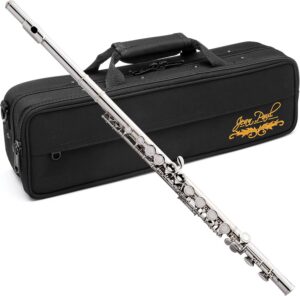
Should You Rent or Buy Your First Flute?
For a child or beginner who isn’t sure whether they’ll continue playing, renting can be a practical option.
Renting allows a student to learn the instrument without making a large initial investment.
Renting may make sense if:
- Your child is just starting band.
- You’re unsure whether they will continue playing.
- Your school has a rental program.
- You want to try the instrument before buying.
Buying may make more sense when:
- You’ve committed to learning the flute.
- You expect to play for several years.
- You want to build toward an intermediate instrument.
- You already know what type of flute you prefer.
If you rent, make sure you understand the rental agreement and whether the payments can eventually be applied toward purchasing the instrument.
When Should You Upgrade Your Flute?
You don’t need to upgrade simply because you’ve been playing for a certain number of years.
Instead, consider upgrading when your current instrument begins limiting your progress or no longer meets your musical needs.
You might consider an upgrade if:
- You’ve developed solid fundamentals.
- You practice consistently.
- You’re playing more advanced repertoire.
- You want greater tonal flexibility.
- You need a more responsive instrument.
- You’re preparing for auditions.
- Your current flute requires frequent repairs.
- Your teacher recommends trying a different instrument.
A good student flute can take a player surprisingly far.
Don’t feel pressured to buy an expensive flute before you’re ready.
What Flute Should You Buy for College?
Students preparing for college auditions often have different needs from beginning or intermediate players.
If you’re planning to major in music or audition for a college flute program, you’ll want to consider an instrument that can support advanced repertoire and give you the tonal flexibility you need for auditions and future study.
Your private teacher or future college flute professor can also be an excellent resource when you’re ready to select an instrument.
For more specific advice, read my guide What Flute Should I Buy for College Auditions?
Common Flute-Buying Mistakes
Buying a flute is a significant decision, especially when you’re purchasing an instrument for a child or investing in an instrument for advanced study.
Here are some common mistakes to avoid.
Buying the Cheapest Flute You Can Find
A low price doesn’t always mean a good deal.
An extremely inexpensive flute may have poor construction or mechanical problems that make it difficult to play.
Buying Based Only on the Brand
A famous brand doesn’t automatically mean every model is right for you.
Pay attention to the specific instrument and how it plays.
Buying Too Much Flute Too Soon
Beginners generally don’t need a professional-level instrument.
Invest in a quality instrument appropriate for your current level.
Choosing Features You Don’t Need
A flute with more features isn’t necessarily better.
For example, a beginner may not need an expensive B footjoint or professional-level materials.
Buying Without Trying the Instrument
When possible, play a flute before purchasing it.
If you’re buying online, look for retailers with reasonable return policies and consider having the instrument inspected after you receive it.
Ignoring Maintenance
Even a high-quality flute needs regular care.
Cleaning your instrument properly and having it checked by a qualified repair technician when necessary can help keep it playing well.
How to Choose a Flute Based on Your Goals
Your musical goals can help determine what type of flute makes sense.
| Your goal | What to consider |
|---|---|
| Just starting | Reliable beginner or student flute |
| School band | Durable student instrument |
| Church playing | Good tone and comfortable response |
| Community band | Quality student or intermediate flute |
| Serious study | Intermediate instrument |
| College music major | Advanced or professional-level instrument |
| Professional performance | Professional flute |
Remember that these are general guidelines. Your teacher can help you choose an instrument based on your individual needs.
Frequently Asked Questions
What is the best flute for a beginner?
The best beginner flute is a reliable, well-made student instrument that feels comfortable and responds easily. You don’t necessarily need the most expensive flute available.
How much should I spend on a beginner flute?
There isn’t one price that works for every student. Consider your budget, how seriously you plan to study, and the quality of the instrument. Avoid choosing a flute based solely on the lowest price.
What flute brand is best?
There isn’t one flute brand that is best for every player. Different manufacturers make instruments for different experience levels and budgets. The specific model and how it feels when you play are both important.
Is an open-hole flute better for beginners?
Not necessarily. Closed-hole flutes can be a practical choice for beginning players. Open-hole flutes become more useful as players develop their technique and encounter repertoire that benefits from them.
Should I buy a used flute?
A used flute can be an excellent choice if it is in good condition. Have it inspected by a qualified repair technician whenever possible before making a purchase.
Should I rent or buy my first flute?
Renting can make sense for a student who is just starting and isn’t sure whether they’ll continue. Buying may make more sense once you’ve committed to playing for several years.
When should I upgrade my flute?
Consider upgrading when you’ve developed solid fundamentals and your current instrument no longer meets your needs. Your teacher can help you determine when you’re ready.
Can a beginner use a professional flute?
A beginner can physically play a professional flute, but it isn’t usually necessary. Professional instruments are expensive, and beginners can develop excellent fundamentals on a quality student instrument.
Final Thoughts
Choosing a flute doesn’t have to be complicated.
Start with your experience level, your musical goals, and your budget. Look for a well-made instrument that feels comfortable and responds easily rather than simply choosing the most expensive model you can afford.
If you’re a beginner, focus on learning and building good fundamentals. As your playing develops, you can always explore intermediate and professional instruments later.
And remember: the best flute isn’t necessarily the most expensive flute. It’s the one that helps you become the best flutist you can be.
If you’re looking for personalized guidance as you begin your flute journey, explore my remote flute lessons or browse my beginner flute resources and sheet music here at CountryFlutist.com.
Happy practicing! 🎵
Enjoyed this article? Download my FREE Flute Gift and receive 5 beginner hymns plus a printable practice tracker.


You Might Also Like: