Flute Buying Guide: How to Choose a Flute
Choosing a flute can feel overwhelming. There are many brands, models, materials, features, and price ranges to consider. If you’re wondering how to choose a flute, start with your playing level, musical goals, budget, and comfort.
The right flute isn’t always the most expensive one you can afford. Instead, look for an instrument that fits your needs and helps you grow as a musician.
Whether you’re buying your first flute, upgrading from a student instrument, preparing for college auditions, or looking for a professional flute, this guide can help.
I’ll walk you through the most important things to consider before you buy.
Table of Contents
- How Do You Choose the Right Flute?
- What Type of Flute Should You Buy?
- Choosing a Flute Based on Your Playing Level
- Beginner Flutes
- Intermediate Flutes
- Advanced and Professional Flutes
- What Flute Features Should You Consider?
- Silver vs. Silver-Plated Flutes
- Closed-Hole vs. Open-Hole Flutes
- C Foot vs. B Foot
- Offset G vs. Inline G
- Should You Buy a New or Used Flute?
- How Much Should You Spend on a Flute?
- Why You Should Play-Test a Flute Before Buying
- Questions to Ask Before Buying a Flute
- When Should You Upgrade Your Flute?
- Choosing a Flute for College or Auditions
- Common Flute-Buying Mistakes
- A Simple Flute-Buying Checklist
- Final Thoughts
How Do You Choose the Right Flute? 
The best way to choose a flute is to match it to your playing level, goals, physical needs, and budget.
Before you start looking at brands and models, think about these questions:
- Am I a beginner, intermediate, advanced, or professional player?
- How often do I plan to play?
- Do I want to play in a school band, community band, church, orchestra, or other group?
- Am I preparing for auditions?
- Do I plan to study music in college?
- Do I want to play professionally someday?
- What is my budget?
- Does the flute feel comfortable in my hands?
These questions can help narrow your choices.
For example, a beginner probably doesn’t need the same flute as an advanced player. On the other hand, a student who plans to study music may want an instrument that will continue to meet their needs as they improve.
What Type of Flute Should You Buy?
Most people who search for a new flute are looking for a Western concert flute. This is the standard flute used in school bands, community bands, orchestras, chamber groups, and many solo performances.
However, these flutes come in many different models.
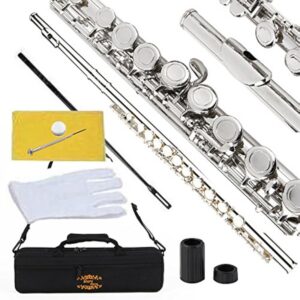
You’ll generally find instruments made for three levels of players:
Beginner or student flutes are made for new players. They focus on ease of use, durability, and reliable keywork.
Intermediate flutes are designed for players who have learned the basics and want better response, tone, and features.
Advanced and professional flutes are made for experienced musicians who need more control, flexibility, and options.
The best flute for you depends on where you are in your musical journey.
Choosing a Flute Based on Your Playing Level
Your playing level is one of the most important things to consider when deciding how to choose a flute.
Beginner Flutes
If you’re just starting, you don’t need to buy the most expensive flute available.
Instead, look for a beginner flute that:
- Feels comfortable to hold
- Has keys that work properly
- Responds easily
- Is mechanically reliable
- Helps you develop good technique
- Fits your budget
For a new player, playability is more important than having every possible feature.
A good first flute should make learning enjoyable rather than frustrating.
If you’re wondering how long it takes to become comfortable on the instrument, read my guide on how long it takes to learn the flute.
Intermediate Flutes
As your skills improve, you may begin to notice things about your beginner flute that you didn’t notice before.
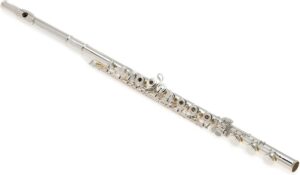
For instance, you may want:
- A more responsive headjoint
- Greater control over your tone
- Better keywork
- More projection
- A larger range
- Open-hole keys
- A B footjoint
An intermediate flute can be a good choice for a serious student who has developed solid basic skills.
Even so, more features don’t always mean a better instrument. Your comfort and playing style still matter.
For more information, see my guide to the best intermediate flute brands.
Advanced and Professional Flutes
Experienced players have different needs from beginners.
Advanced and professional flutes may offer features such as:
- Sterling silver headjoints
- Sterling silver bodies
- Open-hole keys
- B footjoints
- Different headjoint options
- Different key configurations
- Hand-finished mechanisms
At this level, the way an instrument feels can be just as important as its specifications.
Two excellent flutes can feel very different when you play them. Therefore, experienced players often try several instruments before choosing one.
If you’re shopping at this level, you may also want to read my guide to the best advanced flutes and my article about professional flute brands.
What Flute Features Should You Consider?
Once you know what level of flute you need, you can compare the features.
Here are some of the most common ones you’ll see when shopping.
Silver vs. Silver-Plated Flutes
Flutes come in several different materials and combinations.
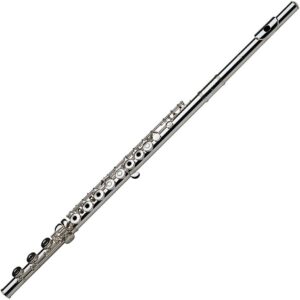
Many student flutes have silver-plated construction. More advanced instruments may use sterling silver for the headjoint, body, or other parts.
A silver headjoint can give you a different response and tone from a silver-plated headjoint. However, more silver does not automatically mean a better flute for every player.
Your sound depends on many things. Your embouchure, air support, technique, and headjoint all play a role.
For that reason, it’s best to try an instrument before deciding.
Closed-Hole vs. Open-Hole Flutes
Another common difference between flutes is the type of keys.
Closed-Hole Keys
Closed-hole keys are common on beginner flutes.
Because the keys are closed, new players don’t have to cover a hole with each finger. This can make the instrument easier to manage while learning.
Open-Hole Keys
Open-hole flutes have openings in several of the keys.
These flutes are common among intermediate and advanced players. They can also provide additional options for certain techniques.
However, open-hole does not automatically mean better.
If you’re considering an open-hole flute, make sure you’re comfortable with it before you buy.
Some players use plugs in the holes while they are getting used to the instrument.
C Foot vs. B Foot
The footjoint is another feature to consider.
A standard C footjoint allows the flute to play down to middle C.
A B footjoint extends the range down to low B.
A B foot can also change the weight and balance of the flute.
For advanced players, the extra low note can be useful because some pieces require it. However, not everyone needs a B foot.
If you’re a beginner, this probably isn’t a feature you need to focus on yet.
Offset G vs. Inline G
You’ll also see flutes described as having an offset G or inline G.
With an offset G, the G keys sit slightly differently from the other keys. This can make the flute more comfortable for some players, especially those with smaller hands.
An inline G may feel better to other players.
Therefore, there isn’t one configuration that is right for everyone.
Comfort should be your main concern.
Should You Buy a New or Used Flute?
A used flute can sometimes give you access to a better instrument for your budget.
However, it’s important to inspect a used flute carefully.
Before buying one, check:
- Are the pads sealing properly?
- Do all the keys work?
- Are any keys bent or damaged?
- Does the mechanism move smoothly?
- Is the headjoint in good condition?
- Does the body have dents?
- Has the flute been maintained?
- Will it need repairs?
A flute that seems like a bargain can become expensive if it needs major repairs.
Whenever possible, have a qualified flute repair technician inspect a used instrument before you buy it.
How Much Should You Spend on a Flute?
There isn’t one price that every flutist should pay.
Instead, consider your goals and how often you expect to use the instrument.
For example, a beginner who is simply trying the flute for the first time may not need to spend thousands of dollars.
A student preparing for college auditions may have different needs. Likewise, a professional musician may need an instrument with specific features.
Rather than asking:
“What is the most expensive flute I can afford?”
ask:
“What flute gives me the quality and features I actually need?”
That question can help you make a much better choice.
Why You Should Play-Test a Flute Before Buying
This may be the most important advice in this guide:
Play the flute before you buy it whenever possible.
An instrument can look perfect on paper and still feel wrong in your hands.
When you test a flute, pay attention to several things.
Response
Does the flute respond easily when you play?
Tone
Do you like the sound?
Intonation
Can you play comfortably in tune throughout the instrument’s range?
Keywork
Do the keys feel comfortable and responsive?
Balance
Does the flute feel balanced while you’re playing?
High Register
Do the high notes respond easily?
Low Register
Can you produce the low notes without too much effort?
Comfort
Can you hold and play the flute comfortably for an extended period?
Most importantly, try more than one flute if you can.
You may be surprised by how different two instruments can feel.
Questions to Ask Before Buying a Flute
Before making a purchase, ask yourself these questions.
Does this flute feel comfortable?
If the instrument causes discomfort, don’t ignore it.
Do I like its sound?
You’ll spend a lot of time listening to your flute. You should enjoy its tone.
Does it respond easily?
A flute that fights you can make practicing frustrating.
Will this flute meet my needs for the next few years?
Think about where you’re going as a musician, not just where you are today.
Can my teacher or another experienced flutist test it with me?
A second opinion can be very helpful.
Has the flute been inspected or serviced?
This is especially important when buying a used instrument.
When Should You Upgrade Your Flute?
There isn’t a set number of years after which every flutist should upgrade.
Instead, look for signs that your current instrument may be limiting you.
You might consider an upgrade when:
- Your technique has improved.
- You’re starting to play more advanced music.
- Your current flute doesn’t respond the way you want.
- You’re having trouble with projection.
- You want more control over your tone.
- You’re preparing for serious auditions.
- Your teacher recommends an upgrade.
- You have developed clear preferences about your sound.
An upgrade should support a goal or solve a problem.
Don’t upgrade simply because you think you’re supposed to.
A well-maintained beginner flute can work very well for some players for many years.
Choosing a Flute for College or Auditions
If you’re preparing for college auditions or planning to study music, your flute deserves careful consideration.
You’ll want an instrument that allows you to show:
- A beautiful, consistent tone
- Good intonation
- Reliable technique
- Clear articulation
- Dynamic control
- A strong upper register
- Musical expression
However, this doesn’t mean you need to buy the most expensive professional flute you can find.
Instead, talk with your private teacher. If you’re applying to music programs, you can also ask the flute professor at the college you’re considering.
They may have recommendations based on the type of music you’ll be expected to play.
Common Flute-Buying Mistakes
Choosing a flute based only on price
A higher price doesn’t automatically mean a better flute for you.
Choosing a brand without playing the instrument
Even different models from the same brand can feel very different.
Buying based only on appearance
A beautiful flute still needs to feel and sound good.
Assuming more features are always better
Open holes, a B foot, and sterling silver can be useful. However, you don’t need every feature to become a good flutist.
Buying a used flute without an inspection
A low price isn’t a bargain if the flute needs expensive repairs.
Ignoring comfort
Your flute should feel natural in your hands.
Not asking your teacher for advice
If you have a flute teacher, take advantage of their experience. They may notice things that a newer player won’t recognize.
A Simple Flute-Buying Checklist
Before you buy, ask yourself:
☐ Is this flute appropriate for my playing level?
☐ Do I like its tone?
☐ Does it respond easily?
☐ Can I play comfortably throughout my range?
☐ Are the keys comfortable?
☐ Does the flute feel balanced?
☐ Have I compared it with other instruments?
☐ Has a teacher or experienced flutist tried it?
☐ If it’s used, has a technician inspected it?
☐ Does it fit my budget?
☐ Will it support my musical goals?
If you can answer yes to most of these questions, you’re on the right track.
Final Thoughts
Learning how to choose a flute doesn’t have to be intimidating.
Start by thinking about your playing level and musical goals. Next, consider the features, materials, price, and comfort of the instruments you’re considering.
Most importantly, play-test the flute before buying it whenever possible.
The best flute for you isn’t necessarily the most expensive model. It isn’t always the one with the longest list of features, either.
Instead, look for an instrument that feels comfortable, responds well, produces a sound you enjoy, and helps you become the musician you want to be.
Your flute needs may also change as you grow. The instrument that works perfectly for you as a beginner may not be the one you want as an advanced player.
That’s completely normal.
Choosing an instrument is part of growing as a musician.
If you’re looking for more flute resources, explore the other flute articles, sheet music, and learning resources here at CountryFlutist.com.
Happy flute shopping—and happy playing!
Enjoyed this article? Download my FREE Flute Gift and receive 5 beginner hymns plus a printable practice tracker.


You Might Also Like: