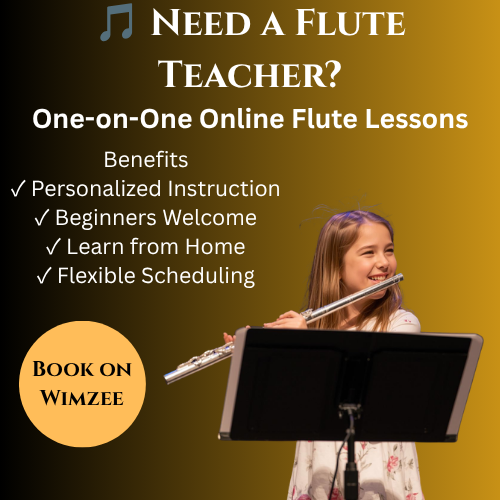
Unlock the enchanting world of the flute, where your musical journey can soar to new heights, regardless of your skill level. Embrace the convenience of expert online lessons tailored for both budding beginners and seasoned flutists seeking fresh challenges.
Imagine effortlessly mastering new techniques, exploring a vast repertoire, and honing your personal expression—all from the comfort of your home. In this digital age, expert guidance is just a click away, empowering you to progress at your own pace with personalized attention.
From the fundamentals of flute playing to advanced techniques and improvisational flair, our online lessons are designed to nurture your unique musical voice. Whether you’re embarking on your first scale or perfecting a complex piece, discover a supportive community ready to inspire and encourage.
Join a global network of flutists, connect with passionate instructors, and elevate your musicianship through interactive and engaging sessions. With structured curriculums, insightful practice tips, and a plethora of resources at your fingertips, the world of flute mastery awaits.
Step into your potential, embrace the joy of music, and let the flute become an extension of your creative spirit. Your journey to becoming a masterful flutist starts now.
How to Choose the Right Flute for Your Skill Level
Selecting the perfect flute is an essential step in your musical journey. It’s important to match your instrument to your current capabilities to ensure a fulfilling and productive learning experience.
For beginners, a reliable student model flute offers durability and ease of play. Look for features like closed holes and an offset G key which make learning more comfortable as you develop basic skills.
As you progress, consider upgrading to an intermediate flute. These models provide open holes and a B-foot joint, offering richer tone and greater control. Such enhancements encourage refinement of technique and tonal quality.
Advanced players often choose professional flutes made of silver or gold, which provide superior sound projection and nuanced articulation. Investing in a high-quality instrument can significantly elevate your performance and expressiveness.
Regardless of your level, seek expert advice in selecting a flute that complements your style and goals. Try different models before making a decision, and consider the long-term benefits of your choice.
Remember, the right flute not only matches your skills but also inspires you to push your boundaries. Let your instrument become a partner in your musical exploration and growth.
Techniques to Master Breath Control for Flute Players
Breath control is a cornerstone of flute playing, allowing for a resonant tone and expressive phrasing. Developing this skill can transform your performance, providing clarity and emotional depth to your music.
Begin with diaphragmatic breathing exercises; they are crucial for building lung capacity and stamina. Practice deep inhalations, focusing on expanding your abdomen rather than your chest. This method ensures a steady, controlled airstream.
Long tone exercises are invaluable for refining your breath control. Focus on sustaining each note with uniformity. Aim for consistency in volume and pitch, gradually increasing the duration as your control improves.
Explore dynamics by intentionally varying the intensity of your airstream. Practicing crescendos and decrescendos helps build the finesse needed for expressive playing. This will also enhance your ability to manage breath across different passages.
Incorporate phrases from your repertoire, concentrating on strategic breathing points. Plan your breaths to maintain fluidity in your music, ensuring each phrase retains its intended character and emotion.
Consistency is key; dedicate time daily to these exercises, and you’ll notice significant progress. Mastering breath control unlocks the full expressive potential of your flute, allowing your personal musical voice to shine with every performance.
Learning Finger Placement and Hand Positioning
Proper finger placement and hand positioning are fundamental to fluent flute playing. Mastering these aspects prevents tension and enhances agility, allowing for more effortless execution of even the most complex passages.
Begin with a relaxed grip, ensuring your arms and hands are free of unnecessary tension. Your fingers should hover lightly over the keys, ready to engage without exerting unnecessary pressure. This approach fosters speed and accuracy in your playing.
Focus on the natural curve of your fingers. Maintain slight arching, allowing fingertips to contact the center of each key. This positioning promotes efficiency, minimizing movement and expediting transitions between notes.
Achieving Comfortable Hand Positioning
Place your right thumb under the flute to support its weight naturally. Your left hand should position its thumb on the key below, providing stability and facilitating key access. This balanced hand positioning is crucial for maintaining control and reducing hand fatigue during extended practice sessions.
Incorporate finger exercises into your routine to develop dexterity. Practice scales and arpeggios at varying tempos, ensuring smooth and accurate key transitions. Regular practice reinforces muscle memory, enhancing your overall proficiency.
Attend to these details consistently, and over time you’ll develop an intuitive grasp of finger placement and hand positioning. This mastery not only improves your technical skills but also elevates your musical expressiveness.
Practicing Scales and Arpeggios to Improve Your Skills
Integrating scales and arpeggios into your practice routine is a powerful way to enhance your flute skills. These exercises develop finger agility, improve intonation, and reinforce your understanding of musical theory.
Begin with major and minor scales, playing them slowly and with precision. Focus on maintaining a consistent tone across registers, ensuring that each note is clear and accurately played.
Enhancing Fluidity and Speed
Gradually increase the tempo as your comfort level grows. This builds your dexterity and helps internalize finger patterns. Challenge yourself by incorporating varying articulations, such as staccato or legato, to refine your technique further.
Arpeggios provide an excellent opportunity to develop interval awareness. Practice them in various keys, paying close attention to transitions between notes. Their repetitive nature builds muscle memory and confidence in navigating the instrument.
Integrate scales and arpeggios creatively into your practice. Use them as warm-ups, technical exercises, or within improvisation sessions. This multifaceted approach not only strengthens your technical foundation but also inspires musical creativity and expression.
Through consistent practice of scales and arpeggios, you’ll notice significant improvements in your overall musicianship. These exercises provide the necessary skills to tackle new challenges and enrich your enjoyment of flute playing.
Exploring Advanced Techniques for Experienced Players
For seasoned flutists, delving into advanced techniques can propel your artistry to new dimensions. These methods challenge your skills and introduce novel sonic possibilities, enhancing your expressive capabilities.
Master flutter tonguing, enriching your sound palette with vibrant textures. This technique involves rolling the tongue to produce a distinct, fluttering effect. Practicing slowly at first, focus on maintaining consistent air support for clarity.
Explore the realm of multiphonics, where you simultaneously produce multiple tones. This advanced technique demands precise embouchure control and breath manipulation. Experiment with different fingerings to unlock a diverse harmonic landscape.
The circular breathing technique is invaluable for long, uninterrupted passages. By simultaneously exhaling through the mouth while inhaling through the nose, you maintain a continuous airstream. Start with simple exercises and progress to integrating it seamlessly into your playing.
Hone your pitch bending skills to add a unique, expressive flair. Slightly adjust your embouchure and airstream to manipulate intonation subtly. This technique is particularly effective in jazz and contemporary music, enhancing emotional depth.
Venturing into these advanced techniques not only expands your technical prowess but also invigorates your creative expression. Embrace these challenges to deepen your musical engagement and captivate your audience with every performance.
Setting Up Your Online Flute Lessons Workspace
Creating an ideal workspace for your online flute lessons is essential for fostering effective learning and concentration. A well-prepared environment enhances your focus, allowing you to engage fully with your instructor.
Start by selecting a quiet, private area free from distractions. This dedicated space should allow you to move freely, accommodating the flute’s range and your posture.
Ensure adequate lighting to maintain focus and minimize eye strain during sessions. Natural light or a well-positioned lamp provides optimal illumination, helping you and your instructor see finger movements and posture clearly.
Set up your device at eye level, ensuring an angle that captures both you and your flute. This perspective allows your instructor to provide accurate feedback on technique and positioning, enhancing the quality of instruction.
Organize your materials within arm’s reach. Keep sheet music, pencils, and practice logs accessible, facilitating easy reference during lessons. A music stand adjusted to a comfortable height further supports seamless learning.
Prioritize a stable internet connection to prevent disruptions. Test audio and video settings beforehand to guarantee clear communication, allowing for uninterrupted focus on your musical progress.
By thoughtfully arranging your online flute lessons workspace, you create an environment that supports productive and enjoyable learning experiences.
Benefits of Online Flute Lessons Over Traditional Methods
Online flute lessons offer a flexible and accessible alternative to traditional in-person instruction. This modern approach caters to diverse learning preferences, making it ideal for today’s busy lifestyles.
One of the most significant advantages is convenience. You can schedule lessons at times that suit your personal routine, eliminating the need for travel and allowing you to learn in the comfort of your own home.
Access to a Wider Range of Instructors
Online platforms connect you with instructors from around the globe, giving you access to a wealth of expertise and teaching styles. This broad selection ensures you find a teacher who best matches your musical goals and personal learning style.
Flexibility in pacing and content customization allows for a more tailored education experience. Whether you seek to focus on classical repertoire or delve into jazz improvisation, online lessons can be adapted to your specific interests and skill level.
Interactive technology enhances the learning process with video recordings, sheet music annotations, and instant feedback. These resources foster comprehensive understanding and support your growth even outside lesson hours.
Ultimately, online flute lessons provide a dynamic and personalized pathway to musical mastery, leveraging technology to enhance both accessibility and effectiveness in modern music education.
The Bottom Line: Mastering the Flute with Expert Online Lessons
In conclusion, mastering the flute through expert online lessons offers an inviting, achievable path for musicians at every level. From beginners embarking on their first musical adventure to advanced players seeking new challenges, the digital realm provides an enriching platform for growth.
The versatility of online learning stands out, offering personalized instruction and flexibility. Without the constraints of geographical boundaries, learners can access a rich tapestry of global expertise, connecting with instructors who resonate with their unique aspirations.
Furthermore, the convenience of scheduling and eliminating travel ensures that learning seamlessly fits into even the busiest of lifestyles. This adaptability not only supports steady progress but also fosters a continuous connection to music, nurturing a lifelong passion.
The inclusion of technology in online lessons enhances traditional methods, providing immediate feedback and a suite of resources that enrich the learning journey. Whether it’s through interactive tools or recorded sessions for review, these modern techniques reinforce the skills needed to flourish as a flutist.
In essence, choosing online flute lessons equips you with the tools and guidance necessary to explore your musical potential fully. Embrace this opportunity to delve into a world of music that is both personalized and expansive, paving the way for artistic expression and fulfillment.
Together, these elements create a dynamic and supportive environment, empowering you to achieve mastery on the flute. Embrace the journey with confidence, knowing that expert guidance and innovative resources await at your fingertips, ready to transform your musical dreams into reality.
Enjoyed this article? Download my FREE Flute Gift and receive 5 beginner hymns plus a printable practice tracker.


You Might Also Like: