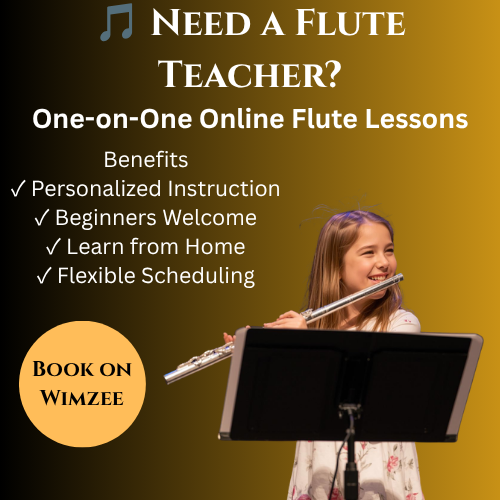
The flute, with its enchanting melodies and dynamic range, offers a fulfilling journey to those who choose to explore it. Whether you’re young or simply young at heart, the flute can be a wonderful way to express yourself musically. One of the best ways to learn flute as a beginner is by blowing across the embouchure hole to produce a sound. This is the first step for every beginner flute player.
Starting with the right guidance is crucial. Quality lessons not only lay a strong foundation but also inspire and motivate new learners to pursue the joy of playing. But how do you find lessons that match your learning style and goals?
This guide will navigate you through the array of options available, from traditional in-person classes to innovative online courses. We’ll explore the key elements to look for in a beginner flute lesson and offer insights into what makes a flute teacher truly exceptional.
Prepare to embark on a musical adventure that could very well transform into a lifelong passion. Whether you dream of solo performances or joining a band, the right flute lessons will set you on your path to musical success.
Why Should You Consider Learning the Flute?
The flute invites you into a diverse world of musical genres—from classical masterpieces and folk melodies to modern pop and jazz riffs. Its versatile nature makes it a good match for various musical tastes and styles.
Learning the flute can significantly enhance your breath control and lung capacity, offering benefits beyond music and into areas like meditation and stress relief. The flute’s soothing sound can bring tranquility to both the player and listeners.
Playing any musical instrument, including the flute, sharpens cognitive abilities, improving memory and discipline. It’s also a fantastic way to boost creativity and emotional expression, letting you channel your feelings into music.
The social aspect of playing the flute should not be underestimated. Joining ensembles or community bands creates opportunities for making new friends and performing in front of audiences, enriching your social life and building confidence.
Whether you aim to become a professional musician or simply enjoy a new hobby, the flute’s compact size and portability make it a convenient choice for music-making wherever you go.
What Makes Flute Lessons Ideal for Beginners?
Flute lessons often begin with the essentials, ensuring that even those with no prior musical experience can grasp the fundamental concepts. Teachers focus on the basics, like correct posture and proper breathing techniques, to avoid developing bad habits early on.
Building a Musical Foundation
For beginners, lessons include easy-to-follow exercises and simple melodies that gradually increase in complexity. This progressive approach builds confidence while keeping students motivated through early successes.
Flute instruction is versatile, catering to various learning paces and styles. Whether it’s one-on-one attention in private lessons or the camaraderie of group classes, there’s a suitable format for everyone. Many programs also offer personalized lesson plans to meet individual needs and goals.
In addition, modern technology facilitates learning through online lessons. These provide flexibility and access to diverse teaching styles, allowing you to learn from the comfort of your home.
Flute lessons typically incorporate music theory and ear training, giving beginners a comprehensive understanding of music. This holistic approach not only improves flute proficiency but also enhances overall musicality, making it easier to learn additional instruments in the future.
How to Choose the Right Flute Teacher for Your Skill Level?
Selecting the right flute teacher is a crucial step in your musical journey. A good teacher can tailor lessons to your skill level, ensuring steady and enjoyable progress.
Assessing Experience and Teaching Style
Begin by researching teachers’ qualifications and experience. Look for someone who has proven expertise, especially in teaching students at your skill level. Reviews and testimonials can provide insights into their teaching style and success with past students.
Consider what you need from your lessons. Some teachers specialize in classical music, while others might focus on jazz or pop. Ensure the teacher’s style aligns with your musical interests to keep lessons engaging and relevant.
The best teachers communicate effectively and inspire their students. During a trial lesson or initial meeting, pay attention to how they interact and explain concepts. A patient and encouraging approach can significantly enhance your learning experience.
Location and scheduling flexibility are also important. Whether you’re opting for in-person or online lessons, ensure that your chosen teacher can accommodate your schedule, making it easier to maintain consistent learning.
Ultimately, trust your instincts. A positive rapport with your flute teacher can foster a supportive environment, motivating you to reach your musical goals.
Top Techniques for Mastering Flute Playing As a Beginner
Beginning your flute journey involves mastering techniques that will make playing both effective and enjoyable. Start with developing a proper embouchure, as it forms the foundation of your sound production. Focus on building a relaxed yet firm lip position to produce a clear and steady tone.
Importance of Breathing Exercises
Breath control is crucial for flutists. Practicing deep breathing exercises will help you maintain a consistent airflow, which is essential for playing long phrases smoothly. Proper breathing supports your sound and enhances overall endurance during practice and performance.
Make it a habit to regularly practice scales and arpeggios. These exercises improve finger dexterity and muscle memory, which are key for playing more complex pieces as you progress. A metronome can be used to gradually increase speed while maintaining accuracy.
Listening skills are vital too. Regularly listen to recordings of professional flutists to internalize different styles and techniques. This will also aid in developing your tone quality and musical interpretation.
Finally, establish a consistent practice routine. Dedicate a set amount of time each day to practice, ensuring a balance between exercises, repertoire, and occasional play for sheer enjoyment. Staying disciplined but flexible in your approach will yield the best results.
Exploring Different Types of Flutes for Beginners
As a beginner, choosing the right flute to start your musical journey is essential. The most common starting point is the concert flute, often referred to as the Western concert flute. Its versatility and wide repertoire make it a popular choice for new musicians.
For younger students or those with smaller hands, the curved headjoint flute provides an alternative by shortening the instrument’s length, making it easier to handle and play. Once the player adapts, transitioning to a standard straight headjoint flute is smooth.
The piccolo, though smaller and pitched higher, offers a bright and unique sound. While not typically recommended as a first instrument, it can be an exciting addition once the basics of flute playing are mastered on a standard flute.
For those interested in world music, the native or wooden flute might appeal. These flutes offer a distinctive tone and are relatively easy to learn, providing a different musical experience from the metal concert flute.
Selecting the right flute depends on personal preference, budget, and musical aspirations. Visiting a music store to try different models can provide valuable insight and help you find the perfect instrument to embark on your flute-playing adventure.
Benefits of Online Flute Lessons for Beginner Players
Online flute lessons are increasingly popular, providing flexibility and accessibility that cater to modern lifestyles. One of the most notable benefits is the convenience of learning from home, eliminating the need for travel and fitting lessons into busy schedules with ease.
Access to Diverse Teaching Styles
The online format offers a broader selection of teachers from around the world, allowing you to find one whose teaching style and experience best match your learning needs. This global reach means you can connect with instructors who specialize in various genres, broadening your exposure and insights.
In addition, many online platforms offer resources like video lessons, interactive exercises, and progress tracking, enhancing the learning experience beyond traditional methods. These tools provide students with the ability to practice skills and techniques at their own pace.
A further advantage is the option to record lessons. This feature allows you to revisit instructions and feedback, ensuring you fully understand the material and can apply it effectively during practice sessions.
Tips for Practicing Flute Regularly and Effectively
Establishing a regular practice routine is crucial for progress and mastery when learning the flute. Set aside a specific time each day dedicated solely to practice. Consistency helps develop muscle memory and reinforces the skills you’re working on.
Setting Goals and Tracking Progress
Breaking down practice sessions into focused segments can enhance effectiveness. Start with warm-up exercises to prepare your body, then proceed to technical drills, and finally, work on repertoire or new pieces. This structured approach maximizes your time and keeps your practice interesting.
Clear, achievable goals are key. Whether it’s mastering a difficult passage or improving tone quality, setting objectives helps maintain motivation and provides a sense of accomplishment. Keep a practice journal to track progress and reflect on areas needing improvement.
Incorporate variety to keep practice sessions enjoyable. Experiment with different genres, improvisation, or play-along tracks to complement your regular routine. This musical exploration enriches your skills and keeps you engaged.
Finally, listening critically to recordings of your practice can provide insights into your playing and help identify areas for refinement. This self-assessment is a valuable tool in guiding your development as a flutist.
Conclusion: Embarking on Your Flute Learning Journey
Embarking on the flute learning journey is both an exciting and rewarding endeavor that offers countless opportunities for personal and musical growth. The flute, with its captivating sound and expressive range, offers a unique path into the world of music. Whether you dream of playing classical pieces, exploring folk melodies, or experimenting with jazz, the flute can be your vehicle for expression.
Selecting the right flute lessons is crucial for laying a strong foundation. Consider your learning style and goals and look for lessons or teachers that inspire and challenge you. Whether through in-person classes or online platforms, the right guidance can greatly enhance your learning experience.
As you begin, remember that persistence and regular practice are key to mastering any new skill. Set aside time each day to develop your technique and explore new musical pieces, and don’t hesitate to stray from your comfort zone to foster creativity.
Additionally, technology and resources now available make learning more accessible than ever before. Take advantage of online lessons, diverse teaching styles, and interactive tools to enrich your practice sessions.
Ultimately, the journey of learning the flute is just as important as the destination. Every note played, every new technique learned, and every milestone achieved brings immense satisfaction. So, embrace the process, stay curious, and let the music be your guide. As you progress, you may find not just improvement in your playing, but also a deeper connection to the music and, perhaps, to yourself.
Sign up for flute lessons with the Country Flutist.
Enjoyed this article? Download my FREE Flute Gift and receive 5 beginner hymns plus a printable practice tracker.


You Might Also Like: