Flute Notes Explained: A Beginner’s Guide to Reading Music on the Flute
If you’re just beginning to play the flute, learning to read flute notes may seem overwhelming at first. All those lines, spaces, symbols, and note names can feel like a completely new language.
The good news is that reading music becomes much easier with practice.
Every experienced flutist started exactly where you are now—learning one note at a time. Before long, you’ll begin recognizing notes automatically and spend less time thinking about the page and more time enjoying your music.
In this guide, I’ll explain the basics of reading flute notes, how they relate to your instrument, and share practical tips that have helped many beginning students build confidence.
Quick Answer: Flute notes are written in the treble clef and represent specific pitches played by covering different combinations of keys on the flute. Most beginners start by learning notes such as B, A, G, C, D, E, and F before gradually expanding their range.
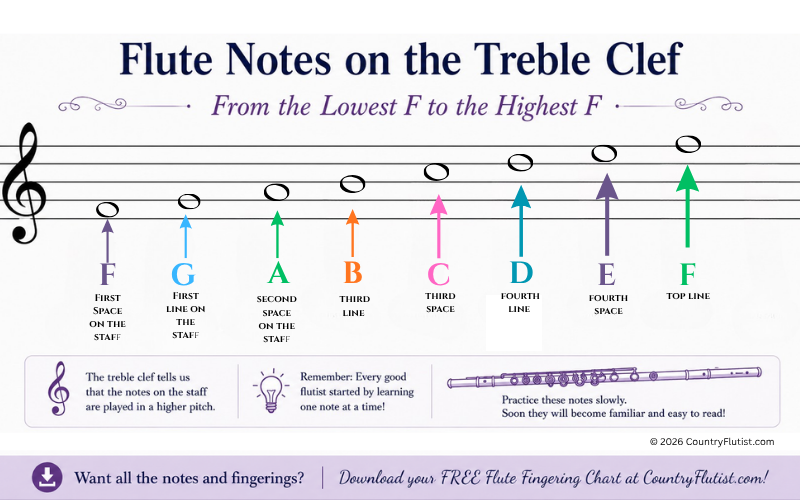
Table of Contents
- What Are Flute Notes?
- Why the Flute Uses Treble Clef
- The Musical Alphabet
- The First Flute Notes Beginners Learn
- Understanding the Staff
- Ledger Lines Explained
- Low, Middle, and High Register Notes
- How Fingerings Match Written Notes
- Tips for Learning Flute Notes Faster
- Common Beginner Mistakes
- Frequently Asked Questions
- Final Thoughts
What Are Flute Notes?
Flute notes are the written symbols that tell you which pitch to play. Each note has a specific location on the musical staff and corresponds to a unique fingering on the flute.
As you learn more notes, you’ll also discover how rhythm, dynamics, articulation, and phrasing work together to create beautiful music.
Learning note names is one of the first steps toward becoming a confident musician.
Why Does the Flute Use the Treble Clef?
The flute is a treble clef instrument.
Unlike instruments such as the bassoon or tuba that frequently read bass clef, nearly all flute music is written using the treble clef.
Once you become comfortable reading treble clef, you’ll be able to play thousands of pieces written for the flute.
The Musical Alphabet
Music uses only seven letter names.
A
B
C
D
E
F
G
After G, the pattern repeats.
Understanding this simple musical alphabet makes reading music much easier because you’ll begin recognizing patterns instead of memorizing every individual note.
Understanding the Musical Staff
The musical staff contains five horizontal lines and four spaces.
Each line and space represents a different musical note.
One of the first things beginning students learn is how to identify notes by their position on the staff.
As you become more comfortable reading music, your eyes will recognize these patterns almost instantly.
The First Flute Notes Beginners Usually Learn
Most beginning flute books introduce notes gradually.
A common sequence is:
B
B is often the very first note because it uses only one finger.
Many students find it easier to produce a clear tone while learning this fingering.
A
Next comes A.
Adding one additional finger begins developing coordination between both hands.
G
G allows students to play simple three-note melodies.
This is often the point where beginning musicians realize they’re actually making music.
C
Middle C introduces the right hand.
At first it may feel awkward, but with practice it quickly becomes comfortable.
D
D expands your note range and opens the door to many familiar songs.
E and F
These notes complete many beginner melodies and prepare students for scales and more advanced music.
Low, Middle, and High Notes
The flute has a wide range.
Most beginners spend their first several months learning notes in the middle register before gradually expanding downward and upward.
Eventually you’ll learn:
- Low notes
- Middle register
- High register
Each register has its own challenges, but developing a beautiful tone in every register takes patience and consistent practice.
How Fingerings Match Written Notes
Every written note corresponds to a specific fingering.
That’s why fingering charts are so valuable for beginners.
Whenever you learn a new note, compare:
- The written note
- Its name
- The fingering
- How it sounds
The more connections you make, the faster you’ll remember each note.
Tips for Learning Flute Notes Faster
Practice Every Day
Even ten to fifteen minutes each day helps your brain remember note names.
Say the Note Names Out Loud
When practicing new music, say each note before playing it.
This reinforces visual recognition.
Learn Small Groups
Don’t try to memorize every note at once.
Master three or four notes before moving on.
Use Flash Cards
Many beginning students enjoy practicing with note flash cards.
They’re an excellent way to build speed and confidence.
Play Familiar Songs
Simple melodies help reinforce notes naturally while making practice enjoyable.
Common Beginner Mistakes
Looking Only at Your Fingers
Try to keep your eyes on the music instead of constantly checking your hands.
With time, fingerings become automatic.
Rushing
Slow practice builds confidence.
Accuracy always comes before speed.
Skipping Difficult Notes
Every note deserves attention.
If one fingering feels awkward, spend a few extra minutes practicing it.
Forgetting Good Posture
Reading music is easier when you’re sitting or standing comfortably with proper posture.
Frequently Asked Questions
How many flute notes should beginners learn first?
Most students begin with six to eight notes before gradually expanding their range.
Is it difficult to read flute music?
At first it may feel challenging, but reading music becomes much easier with consistent practice.
Do I need to memorize every fingering?
Eventually yes, but don’t try to learn everything at once.
Focus on a few notes each week.
What’s the fastest way to learn flute notes?
Practice regularly, use a fingering chart, play simple songs, and review previously learned notes every day.
Where can I find free flute music?
If you’re looking for beginner-friendly arrangements, be sure to explore the free sheet music available here on CountryFlutist.com.
Final Thoughts
Learning flute notes is the foundation of your musical journey.
Don’t worry if everything doesn’t make sense immediately.
Every musician learns one note at a time, and with patience you’ll soon be reading music with confidence.
If you’re just getting started, don’t forget to download my Free Flute Gift, which includes beginner-friendly hymns, practice tips, and a printable practice tracker.
And if you’d like additional guidance, I also offer remote flute lessons to help students build confidence from the very beginning.
Happy practicing!

You Might Also Like: