So, you’ve decided to embark on a musical journey by learning to play the flute. Congratulations on taking the first step towards mastering this beautiful instrument! Whether you’re a complete novice or have some musical background, this comprehensive guide will help you navigate the world of beginner flute lessons with confidence and ease.
Getting Started: Choosing the Right Flute
Before diving into your first lesson, it’s essential to choose the right flute that suits your needs and budget. When selecting a beginner flute, consider factors such as material, key, and brand. Generally, beginner flutes are made of nickel, silver-plated nickel, or silver. For those on a tight budget, a nickel flute is a great starting point. However, if you’re looking for a more durable and better-quality option, a silver flute may be worth the investment.
Understanding the Basics: Parts of the Flute
Familiarize yourself with the different parts of the flute to better understand how it functions. The main components of a flute include the headjoint, body, and footjoint. The headjoint houses the mouthpiece and the lip plate, which is where you blow air into the flute. Moving down the flute, you’ll find the body, which contains the tone holes and keys for producing various notes. Lastly, the footjoint extends the range of the flute by allowing you to play lower notes.
Embouchure: The Key to Beautiful Tones
One of the most critical aspects of flute playing is mastering the correct embouchure. Your embouchure refers to the way you shape your lips and form your mouth when blowing air into the flute. To achieve a clear and resonant tone, practice forming a small, round aperture with your lips and directing the air across the blow hole. Remember, the quality of your sound is heavily influenced by your embouchure, so devote time to perfecting this technique.
Breathing and Posture
Proper breathing techniques and posture are fundamental to playing the flute effectively. Maintain good posture by sitting up straight, relaxing your shoulders, and keeping your head level. When inhaling, take deep breaths from your diaphragm to ensure a steady airflow. Avoid shallow breathing from your chest, as this can lead to a lack of breath support and affect your tone quality. Practice breathing exercises to improve your lung capacity and control over your airflow.
Fingerings and Hand Position
Mastering flute fingerings and hand position is crucial for playing different notes accurately. Each finger on your hands corresponds to a specific key or tone hole on the flute. Practice placing your fingers gently on the keys without pressing down too hard, as excessive force can hinder your technique and speed. Familiarize yourself with basic fingerings for notes and scales, and gradually increase the complexity of your finger patterns as you progress.
Articulation and Dynamics
Articulation and dynamics are essential elements that give life and expression to your flute playing. Experiment with various articulation techniques, such as staccato, legato, and accents, to add texture and character to your music. Additionally, practice playing with different dynamics, ranging from pianissimo (very soft) to fortissimo (very loud), to create contrast and emotional depth in your performances. Remember to use your breath control to support these nuances in your playing.
Practice Strategies: Quality Over Quantity
When it comes to practicing the flute, focus on quality over quantity. Devote regular, consistent practice sessions to build muscle memory, improve your technique, and refine your tone. Set specific goals for each practice session, whether it’s mastering a particular scale, working on a challenging passage, or enhancing your overall musicality. Break down complex pieces into smaller sections and practice them slowly, gradually increasing the tempo as you gain confidence.
Seeking Guidance: Finding a Qualified Instructor
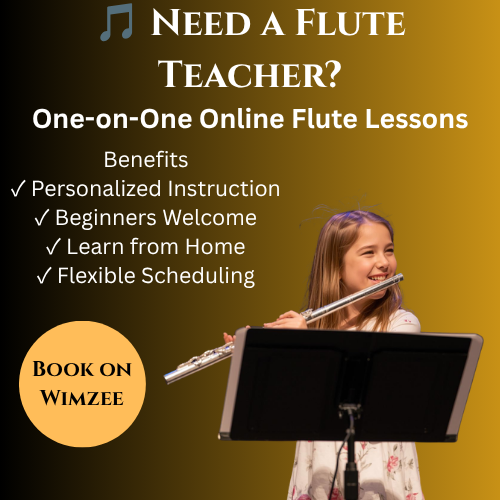
While self-study can be beneficial, seeking guidance from a qualified flute instructor is invaluable in your musical journey. A skilled teacher can provide personalized feedback, correct your technique, introduce new concepts, and offer encouragement and support. Consider online flute lessons for flexibility and access to a range of instructors. Taking lessons from a professional instructor will help you progress faster and develop a solid foundation in flute playing.
Performance Opportunities: Joining a Music Community
As you become more proficient in playing the flute, consider joining a music community or ensemble to enhance your skills and gain performance experience. Playing with other musicians in a group setting can boost your confidence, improve your ensemble playing, and expose you to a diverse range of musical genres. Whether it’s a local flute choir, community band, or school orchestra, participating in group performances can be both rewarding and enjoyable.
The Bottom Line
In conclusion, mastering beginner flute lessons requires dedication, patience, and a positive attitude. By choosing the right flute, understanding the instrument’s basics, developing proper technique, and seeking guidance from a qualified instructor, you’ll be well on your way to becoming a proficient flute player. Remember to practice consistently, explore different musical styles, and embrace the joys of making music. With perseverance and a love for the flute, you’ll undoubtedly excel in your musical endeavors. Happy playing!
Enjoyed this article? Download my FREE Flute Gift and receive 5 beginner hymns plus a printable practice tracker.


You Might Also Like: